
In short
Imagine a situation where you have a drone armed with a camera, distance sensors and an engine. These separate components don’t do anything on their own. At Computer Science, you will learn to write software that can control these separate components and make them work together, to make the drone independently adjust its altitude, dodge obstacles and fly a safe route.
That is what this study programme is all about: you create the software that determines how a piece of equipment behaves. How sensors, cameras and engines communicate with each other. And how the equipment responds to what is happening in the immediate environment. This could be a drone, but it could also be industrial equipment, a home automation system or medical equipment.
Study support
You’re not alone in this
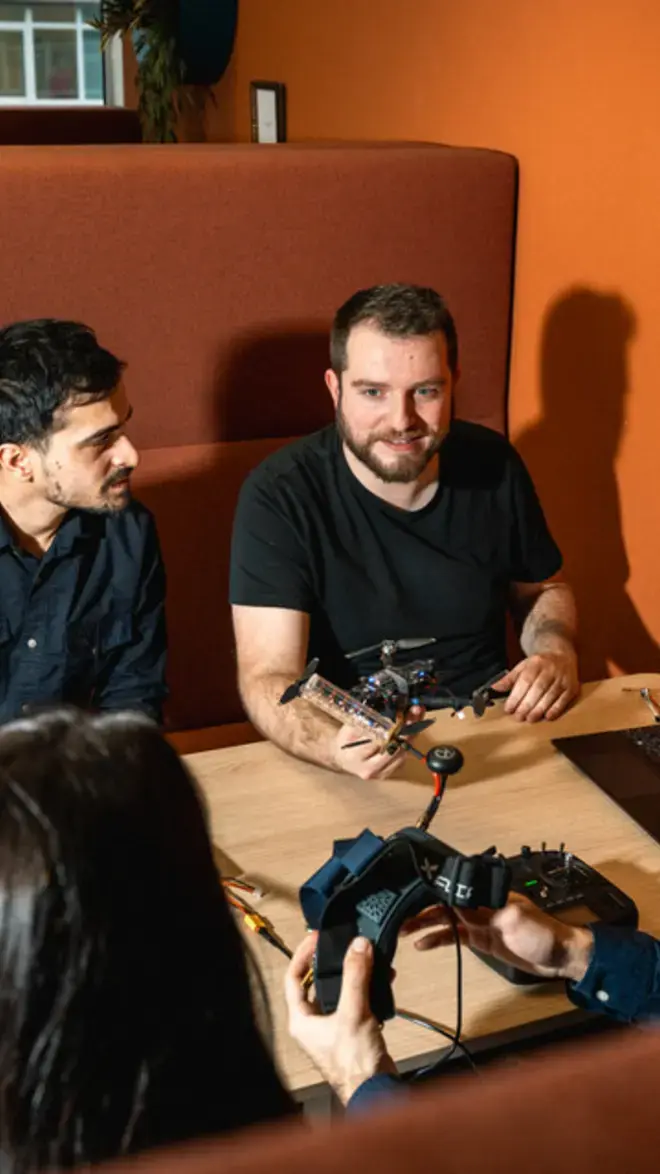
Graduate story
Looking back on student life
Explore from home?
Join an online session

Internships as part of your studies
Learn outside the classroom
What will you become?
Explore possible careers

Join our Open Day
Ask all your questions, soak up the atmosphere and experience what it’s like to study here. Whether you already know what you want or are still deciding, discover what truly suits you during the open day.
Join an Online Session
Join an online session to learn more about the programme and ask your questions.
Download the programme brochure
Everything about the programme content, admission, internships and future opportunities, all in one clear document.
Why study Computer Science at Zuyd?
-
Together, we will work towards solutions that matter
From the very first year, you will work on practice-oriented assignments. This will give you immediate insight into the impact of your ideas.
-
International vibe in Maastricht
The working language here is English, and you will work with students from various countries. This will also give you insight into other cultures and ideas.
-
The software behind it all
Without computer science, all machines in factories would stand idle. That is why you have a crucial role to play. You ensure that everything keeps running.
-
You decide what suits you
With electives, internships and graduation assignments, you create your own learning pathway.
-
Personal guidance
You’ll have a dedicated academic advisor to guide you. Together, you’ll discover your strengths and how to use them, helping you grow step by step into a computer science specialist.

Study in the student city of Maastricht
You will be studying Computer Science in Maastricht,in a modern, high-tech environment designed to inspire innovation. It’s a dynamic place where you collaborate, experiment, and bring ideas to life, often working alongside students from Applied Data Science & Artificial Intelligence.
The building is easy to reach by public transport. It’s just a five-minute walk from Maastricht Randwyck station. Located close to Maastricht University and the academic hospital, you’ll be in the heart of a lively, international student environment where you’ll quickly feel at home.

We are Zuyd. We are close-knit, sincere and confident

Programme Structure
The first-year programme of the bsc Computer Science involves a broad introduction. After that, we will go into increasingly greater depth, always using practical assignments or examples from professional practice. Finally, in the third year, you will complete an internship and continue to specialise.
Your first year
In the first year of the bsc Computer Science, you will learn programming and work on practice-oriented assignments. Mathematics plays an important role, as it allows you to understand what is necessary to control an embedded system (such as a robot or some other machine). This is the basis for the rest of your studies and your career.
Computer science takes care of the connection between hardware, such as cameras and sensors. Without embedded software, they won’t do much, but you will soon learn how to make them all work together, truly ‘bringing them to life’. In fact, if we didn’t have computer science, you would not be able to read this on your computer or smartphone. Nor would you even be able to turn on your smartphone or tablet. Even the power button of these devices only works thanks to embedded software.
Thankfully, we do have computer science, and we will teach you how to create whatever you want.
As an international study programme, you will frequently work with students from around the world and gain valuable insights into different cultures. With AI becoming increasingly important in the field, we also collaborate closely with the Applied Data Science & Artificial Intelligence programme. Based in the same building, we form a shared, vibrant community.
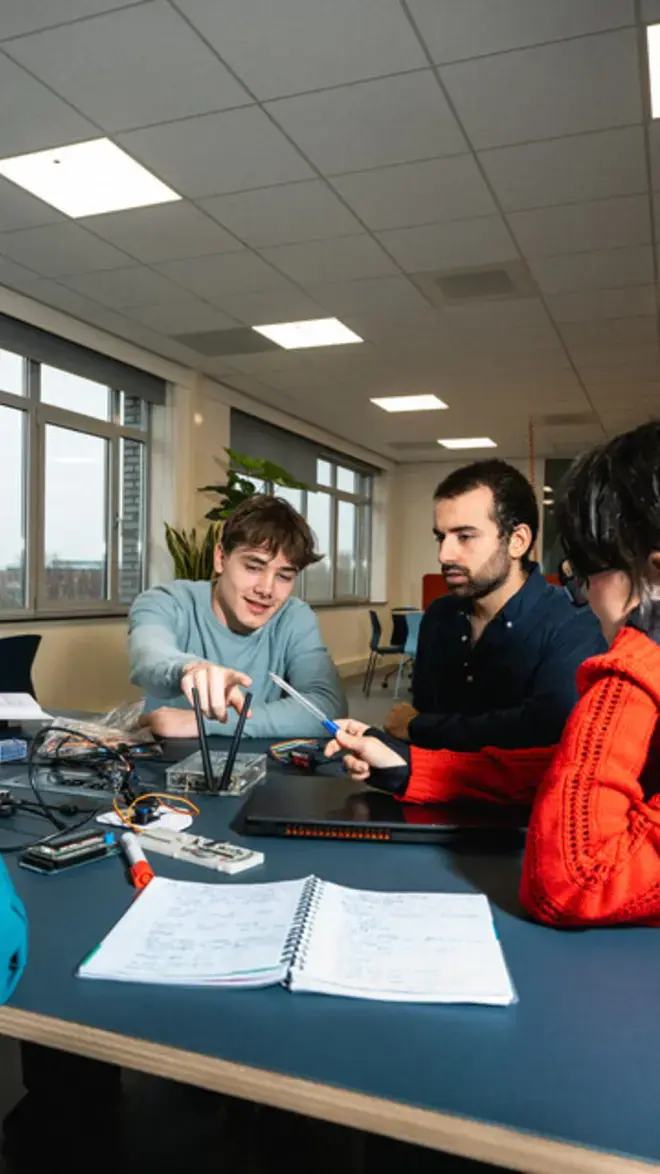
Let’s take a look at your timetable. Each week will start with lectures on Monday. At these lectures, you will hear about the topics for that week. You will discuss the material in greater depth during discussion sessions. Over the course of the rest of the week, you will work on practice-oriented assignments in small groups.
As you will also receive personal guidance, you can easily ask any questions and discuss ideas and initiatives. We will also visit companies to take a look behind the scenes.
However, there is of course much more to being a student. How about a journey of discovery through the student city of Maastricht? Other fun events include the three-day camping trip at the start of your first year, visiting the Three-Country Point in Vaals and eating traditional nonnevot pastries with carnival!
Advanced study and practical experience
In the second year of the bachelor’s in Computer Science, we will continue to build on what you learned in the first year. We will look at the technology of embedded systems in greater depth, and you will broaden your knowledge about the professional field. The assignments will become more elaborate. You will discover more and more about the possibilities.
For example, we will work with embedded systems in the automotive industry, with robot vacuums or with industrial equipment. How would you feel about making a digital twin for a factory production line? That would mean making a complete copy of that machine, including all sensors and operating software. Thanks to this digital twin, you can make the machine run way faster than you could in reality. For example, this could help you discover that the machine would jam in 3 weeks. This information is incredibly valuable: the mechanic will know to schedule in some maintenance work to prevent half the factory from being inactive.
You will get to work for companies that use embedded systems. This could include machine manufacturers, the high-tech industry and technology companies like Siemens or VDL. This way, you can directly see how incredibly valuable your knowledge and skills are to organisations. The great thing about a digital twin is that you can experiment in a safe environment. You can test your embedded software on the virtual model, optimise the controls and make sure everything works as it should before using it on the real thing. This is also how companies do it.
Year 3 and 4
In the third year, you will complete an internship and 2 elective modules, which we call minors. You will take another 2 elective modules in your final year, followed by graduation. You must complete 2 of these elective modules within Computer Science. You can take the other 2 at a different study programme, either at Zuyd or elsewhere. This will allow you to specialise in a direction of your choice. Alternatively, you could also expand your knowledge with an elective module from a completely different field, such as ‘entrepreneurship’ or ‘communication’. You could even study abroad. With all these options, be sure to choose something that matches your plans and your passion.
Computer Science is the study programme where everything comes together. In 4 years’ time, with your interest in embedded systems and technology, you should be able to solve just about any technological problem. Of course, we will give you all the room you need to explore your creative side. Here, you will learn everything there is to know about the world of embedded software and hardware.
In the third and fourth year, you will realise that you can read data and know how to program embedded systems. This combination will make you a multi-faceted professional. You will demonstrate this during your graduation. This will involve a graduation project, a thesis, in which you deploy all of your knowledge to come up with a solution to a problem. Once you have done this, you will have completed the cs study programme and be awarded a diploma.
Internships
In the third year, you will complete a six-month internship at a company or institution in the local area or in the wider Euregio Meuse-Rhine. You are free to find an interesting internship yourself, or you can choose from one of the many companies and institutions with which we collaborate. These include technology companies, machine manufacturers and organisations at the Brightlands innovation campuses.
Many of our partners at Brightlands are constantly looking for graduates with a computer science degree. This means your internship can truly be the start of your career!
During your internship, you will discover how your knowledge about embedded systems can make a difference in practice. You will see how companies apply computer science on a daily basis. This will give you insight into which roles and tasks are a good fit for you.
Guidance and support
When studying Computer Science at Zuyd, you’ll never be alone. From day 1, a team of highly qualified lecturers with considerable practical experience will provide guidance. Our lecturers know the ins and outs of the world of embedded systems, and they are always ready to answer questions, offer practical tips and challenge you to be the best you can be.
You will also receive personal guidance throughout your study career. Your academic guidance counsellor will help you think about your development and help you make choices that fit your interests and talents. This personal approach will help you feel at home here in no time. We will give you all the room you need to develop into a confident professional.
You will soon be part of our international ‘learning community’. This is an international network of students, lecturers, researchers and experts from professional practice. This means you will have access to all of our workshops and events, so you can always learn something new. Not only will you learn a lot about professional practice, you will also see how important embedded systems are at the global level.
Your first year
Your first year
In the first year of the bsc Computer Science, you will learn programming and work on practice-oriented assignments. Mathematics plays an important role, as it allows you to understand what is necessary to control an embedded system (such as a robot or some other machine). This is the basis for the rest of your studies and your career.
Computer science takes care of the connection between hardware, such as cameras and sensors. Without embedded software, they won’t do much, but you will soon learn how to make them all work together, truly ‘bringing them to life’. In fact, if we didn’t have computer science, you would not be able to read this on your computer or smartphone. Nor would you even be able to turn on your smartphone or tablet. Even the power button of these devices only works thanks to embedded software.
Thankfully, we do have computer science, and we will teach you how to create whatever you want.
As an international study programme, you will frequently work with students from around the world and gain valuable insights into different cultures. With AI becoming increasingly important in the field, we also collaborate closely with the Applied Data Science & Artificial Intelligence programme. Based in the same building, we form a shared, vibrant community.
Let’s take a look at your timetable. Each week will start with lectures on Monday. At these lectures, you will hear about the topics for that week. You will discuss the material in greater depth during discussion sessions. Over the course of the rest of the week, you will work on practice-oriented assignments in small groups.
As you will also receive personal guidance, you can easily ask any questions and discuss ideas and initiatives. We will also visit companies to take a look behind the scenes.
However, there is of course much more to being a student. How about a journey of discovery through the student city of Maastricht? Other fun events include the three-day camping trip at the start of your first year, visiting the Three-Country Point in Vaals and eating traditional nonnevot pastries with carnival!
Advanced study and practical experience
Advanced study and practical experience
In the second year of the bachelor’s in Computer Science, we will continue to build on what you learned in the first year. We will look at the technology of embedded systems in greater depth, and you will broaden your knowledge about the professional field. The assignments will become more elaborate. You will discover more and more about the possibilities.
For example, we will work with embedded systems in the automotive industry, with robot vacuums or with industrial equipment. How would you feel about making a digital twin for a factory production line? That would mean making a complete copy of that machine, including all sensors and operating software. Thanks to this digital twin, you can make the machine run way faster than you could in reality. For example, this could help you discover that the machine would jam in 3 weeks. This information is incredibly valuable: the mechanic will know to schedule in some maintenance work to prevent half the factory from being inactive.
You will get to work for companies that use embedded systems. This could include machine manufacturers, the high-tech industry and technology companies like Siemens or VDL. This way, you can directly see how incredibly valuable your knowledge and skills are to organisations. The great thing about a digital twin is that you can experiment in a safe environment. You can test your embedded software on the virtual model, optimise the controls and make sure everything works as it should before using it on the real thing. This is also how companies do it.
Year 3 and 4
In the third year, you will complete an internship and 2 elective modules, which we call minors. You will take another 2 elective modules in your final year, followed by graduation. You must complete 2 of these elective modules within Computer Science. You can take the other 2 at a different study programme, either at Zuyd or elsewhere. This will allow you to specialise in a direction of your choice. Alternatively, you could also expand your knowledge with an elective module from a completely different field, such as ‘entrepreneurship’ or ‘communication’. You could even study abroad. With all these options, be sure to choose something that matches your plans and your passion.
Computer Science is the study programme where everything comes together. In 4 years’ time, with your interest in embedded systems and technology, you should be able to solve just about any technological problem. Of course, we will give you all the room you need to explore your creative side. Here, you will learn everything there is to know about the world of embedded software and hardware.
In the third and fourth year, you will realise that you can read data and know how to program embedded systems. This combination will make you a multi-faceted professional. You will demonstrate this during your graduation. This will involve a graduation project, a thesis, in which you deploy all of your knowledge to come up with a solution to a problem. Once you have done this, you will have completed the cs study programme and be awarded a diploma.
Internships
Internships
In the third year, you will complete a six-month internship at a company or institution in the local area or in the wider Euregio Meuse-Rhine. You are free to find an interesting internship yourself, or you can choose from one of the many companies and institutions with which we collaborate. These include technology companies, machine manufacturers and organisations at the Brightlands innovation campuses.
Many of our partners at Brightlands are constantly looking for graduates with a computer science degree. This means your internship can truly be the start of your career!
During your internship, you will discover how your knowledge about embedded systems can make a difference in practice. You will see how companies apply computer science on a daily basis. This will give you insight into which roles and tasks are a good fit for you.
Guidance and support
Guidance and support
When studying Computer Science at Zuyd, you’ll never be alone. From day 1, a team of highly qualified lecturers with considerable practical experience will provide guidance. Our lecturers know the ins and outs of the world of embedded systems, and they are always ready to answer questions, offer practical tips and challenge you to be the best you can be.
You will also receive personal guidance throughout your study career. Your academic guidance counsellor will help you think about your development and help you make choices that fit your interests and talents. This personal approach will help you feel at home here in no time. We will give you all the room you need to develop into a confident professional.
You will soon be part of our international ‘learning community’. This is an international network of students, lecturers, researchers and experts from professional practice. This means you will have access to all of our workshops and events, so you can always learn something new. Not only will you learn a lot about professional practice, you will also see how important embedded systems are at the global level.
Let's Meet
If you are still unsure about which study programme you want to choose, why not join our (online) open day or info session to get a real taste of what Computer Science is like.
Explore from home?
Want to hear more about Computer Science? Join an online session to learn more about the programme and ask your questions.

Try it yourself
Want to learn more about the bsc Computer Science? Try it yourself! Join an interactive workshop in programming or virtual reality, and get a taste of the practical side of our programme.

Open Day at Computer Science
At the Open Day, you’ll discover what the Computer Science programme is all about. Lecturers and students give presentations and demos, so you get a real feel for studying here. Explore the building, experience the atmosphere, and ask all your questions to our students and staff.

What Comes Next
A computer science degree will open doors. Whether you decide to find a job or continue your academic career, being armed with knowledge and practical experience gives you a stronger position. Find out which professions you will have access to and what your chances are on the job market.
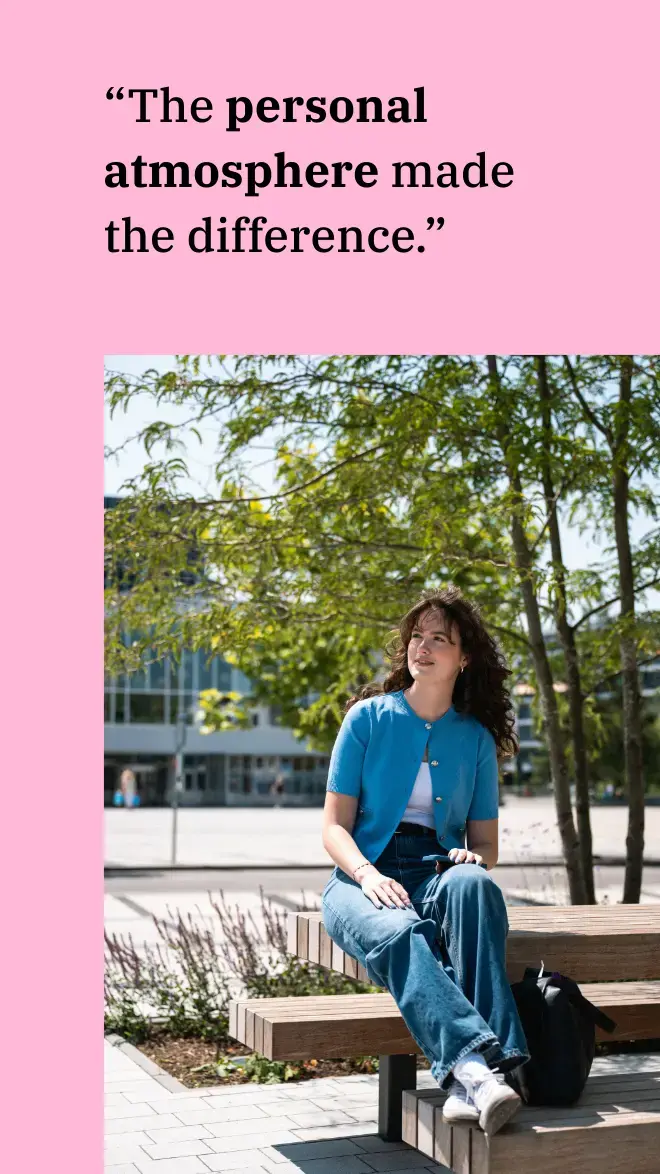
The personal atmosphere made the difference.
Chanaika studied at Zuyd and looks back on her student days with joy. “At Zuyd, I never felt like just a number,” she shares. “The close-knit atmosphere and the personal connection with fellow students and lecturers made me feel at home right away.”
During her studies, she worked on projects for real organizations. “It was inspiring to put into practice what I had learned in class straight away.” She also had the freedom to broaden and deepen her knowledge through minors and internships. “Those opportunities really expanded my perspective on the professional field.”
The sense of community at Zuyd has always stayed with her, through activities and encounters that created real connection. “The combination of learning, doing, and experiencing together gave me the confidence to apply my knowledge in the workplace.

Your future
Professions
Job prospects and salary
With a bachelor’s degree in computer science, you will have a job in no time, as the number of vacancies keeps growing. In the Netherlands alone, there are already thousands of vacancies. No need to worry about the salary either, as it will absolutely be worth your time.
After completing your cs degree, there will be many places where you can find work, such as the high-tech industry, the automotive industry, machine manufacturing, medical technology or companies like Siemens and VDL. The Brightlands innovation campuses also have many companies looking for embedded specialists.
Continue studying
You can also continue studying after completing the computer science degree. Thanks to our collaborations with the Open Universiteit (OU) in Heerlen, Maastricht University (UM) and Eindhoven University of Technology (TU/e), you can easily move on to a master’s degree at one of those institutes. Here are several of the possible master’s degrees:
- Computer Science (Open Universiteit)
- Computer Science (TU/e)
- Computer Science (UM)
- Artificial Intelligence (UM)
Practical Information
Are you thinking about doing a bachelor’s degree in computer science? And would you like to have some idea of what’s in store for you, how to register, what the admission requirements are and what costs are involved? We will explain everything clearly.
Study load and study advice
Every week will start with lectures on Monday. During these lectures, you will explore new topics together with your fellow cs students from different countries. We will teach you the theoretical basics you will need to work on projects and assignments during the rest of the week. On Tuesdays and Wednesdays, you will attend discussion sessions. There, you will discuss the subject matter in more detail in smaller groups. We will discuss various issues and exchange creative ideas. A lecturer will guide these sessions and help you develop in-depth insights.
On Thursdays and Fridays, you will have the opportunity to combine everything you have learned with your ideas and put them into practice. You will do this individually and in groups. At the start of your study programme, you will work on practice projects to give you an idea of how to apply the basics of embedded systems. However, you will soon move on to assignments for actual organisations in the region. For example, you may end up working with companies from the Brightlands innovation campuses in Heerlen en Geleen.
On average, you will spend 40 hours each week working on your cs study programme. In addition to contact hours with lecturers, this will involve a lot of independent work and work in project groups. You will work on a design, attach sensors and cameras to a drone, combine all of this in an operating system and subsequently test whether everything works.
Learning routes
There are no separate learning pathways within our programme bsc Computer Science for students who have already completed a vocational or pre-university education programme.
Application
Want to start Computer Science? Great! Some programmes have additional admission requirements, so check these in advance. After you apply, we’ll invite you for a study choice check to make sure the programme is the right fit for you, so you can start well prepared.
Tuition fees
As a degree-seeking student you will have to pay annual tuition fees. Students from the EU pay the statutory tuition fees, and non-EU students pay the institutional tuition fees. Normally speaking, these fees are waived for exchange students from partner universities.
Education and examination regulations
The education and examination regulations (EER) provide all the information you will need about the content of the study programme, the academic support provided, and the way in which examinations are organised.
Study in the Netherlands
Curious about what it’s like to study in the Netherlands? From outstanding education to a warm, international atmosphere, it’s all here. Discover what makes the Netherlands such a great study destination. We tell you all about it on the Study in the Netherlands page.
Study load and study advice
Study load and study advice
Every week will start with lectures on Monday. During these lectures, you will explore new topics together with your fellow cs students from different countries. We will teach you the theoretical basics you will need to work on projects and assignments during the rest of the week. On Tuesdays and Wednesdays, you will attend discussion sessions. There, you will discuss the subject matter in more detail in smaller groups. We will discuss various issues and exchange creative ideas. A lecturer will guide these sessions and help you develop in-depth insights.
On Thursdays and Fridays, you will have the opportunity to combine everything you have learned with your ideas and put them into practice. You will do this individually and in groups. At the start of your study programme, you will work on practice projects to give you an idea of how to apply the basics of embedded systems. However, you will soon move on to assignments for actual organisations in the region. For example, you may end up working with companies from the Brightlands innovation campuses in Heerlen en Geleen.
On average, you will spend 40 hours each week working on your cs study programme. In addition to contact hours with lecturers, this will involve a lot of independent work and work in project groups. You will work on a design, attach sensors and cameras to a drone, combine all of this in an operating system and subsequently test whether everything works.
Learning routes
Learning routes
There are no separate learning pathways within our programme bsc Computer Science for students who have already completed a vocational or pre-university education programme.
Application
Application
Want to start Computer Science? Great! Some programmes have additional admission requirements, so check these in advance. After you apply, we’ll invite you for a study choice check to make sure the programme is the right fit for you, so you can start well prepared.
Tuition fees
Tuition fees
As a degree-seeking student you will have to pay annual tuition fees. Students from the EU pay the statutory tuition fees, and non-EU students pay the institutional tuition fees. Normally speaking, these fees are waived for exchange students from partner universities.
Education and examination regulations
Education and examination regulations
The education and examination regulations (EER) provide all the information you will need about the content of the study programme, the academic support provided, and the way in which examinations are organised.
Study in the Netherlands
Study in the Netherlands
Curious about what it’s like to study in the Netherlands? From outstanding education to a warm, international atmosphere, it’s all here. Discover what makes the Netherlands such a great study destination. We tell you all about it on the Study in the Netherlands page.
Admission requirements
Non-Dutch diploma
A secondary school diploma equivalent to the Dutch levels (MBO-4, HAVO and VWO) , e.g.:
- Abitur, Fachhochschulreife
- International baccalaureate, European Baccalaureate
- High school, GPA average at least 3.0
Havo
- Profile Science & Technology
- Profile Science & Health, with mathematics A/B
- Profile Economics & Society, with mathematics A/B
- Profile Culture & Society, with mathematics A/B
Vwo
- Profile Science & Technology
- Profile Science & Health, with mathematics A/B
- Profile Economics & Society, with mathematics A/B
- Profile Culture & Society, with mathematics A/B
Mbo
You can also take the study programme if you have obtained a senior secondary vocational education (mbo) level 4 diploma. Do keep in mind that mathematics plays an important role in our study programme, and not all mbo study programmes adequately prepare you for this.
21+
If you do not have the right diploma, but you are 21 or older, apply for the 21+ test. You’ll find more information on this website.
Extra admission requirements
You must also receive a passing mark for the Orientation, Motivation and Personality test (OMP test) level C for mathematics and obtain an International English Language Testing System (IELTS) certificate with an overall band score of at least 6. Scoring 550 points on the Test of English as a Foreign Language (TOEFL) on paper is also acceptable. For the online version, you must score at least 80 points. The results of this test are valid for two years. Cambridge results do not have an expiration date.
Join our Open Day
Ask all your questions, soak up the atmosphere and experience what it’s like to study here. Whether you already know what you want or are still deciding, discover what truly suits you during the open day.

Join an Online Session
Join one of our online info sessions and get a good first impression of our programme.

Download the programme brochure
Everything about the programme content, admission, internships and future opportunities, all in one clear document.

Applied Data Science & Artificial Intelligence
Help doctors detect and predict diseases early. Or accelerate the energy transition by developing intelligent systems that predict our energy needs. We dive into data and algorithms, but also look at the impact of AI on society.
Good to know: the Artificial Intelligence bachelor is taught entirely in English, preparing you right from the start for an international working environment.
