
In short
Smart use of energy and resources in cities and districts. That’s what you’ll study in Circular Cities & Communities. You know, it is possible to use demolition materials when replacing an old neighbourhood with a new one. And waste heat from a data centre can be used to heat houses. Soon, you’ll be coming up with these kinds of great green and sustainable solutions too! And you’ll advise municipalities or companies on them.
This international track is part of our Built Environment programme. It is the only programme in Europe for construction experts in circularity. And these experts are urgently needed – many people are looking for housing, while at the same time we want to be 100 per cent circular by 2050. So, bring on your creativity! Circular Cities & Communities is an international course. You will study and work with students and teachers from all over the world during our green building bachelor program. That’s why all lessons are taught in English.
Study support
You're not alone in this
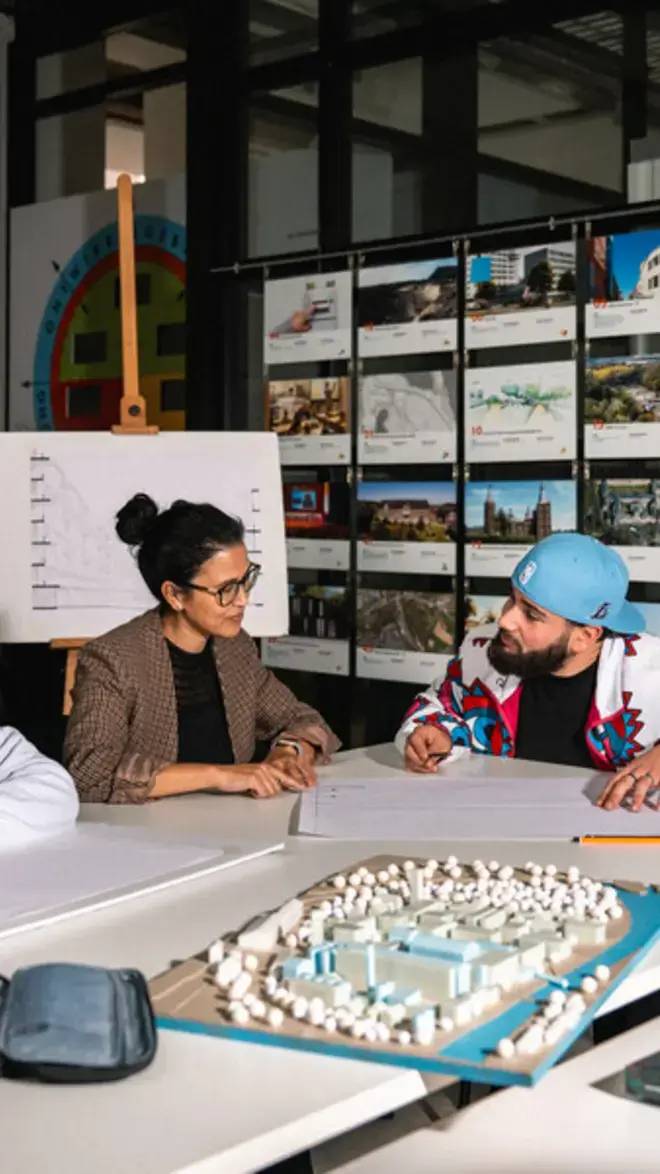
Graduate story
Looking back on student life
Explore from home?
Join an online session

Internships as part of your studies
Learn outside the classroom
What will you become?
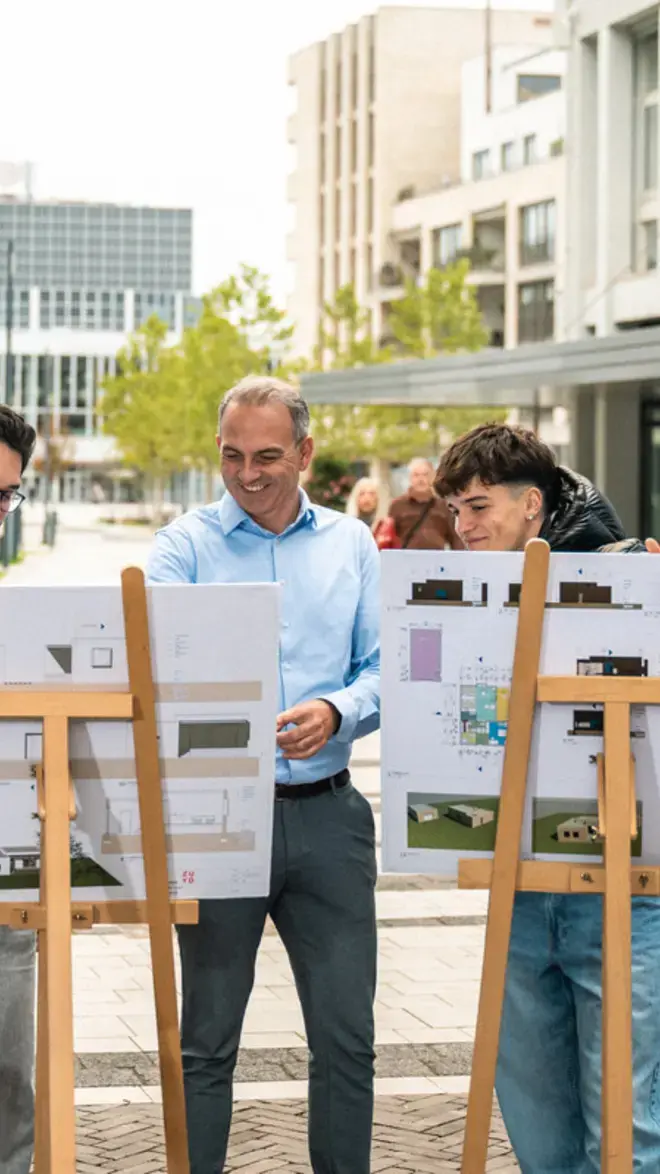
Explore possible careers
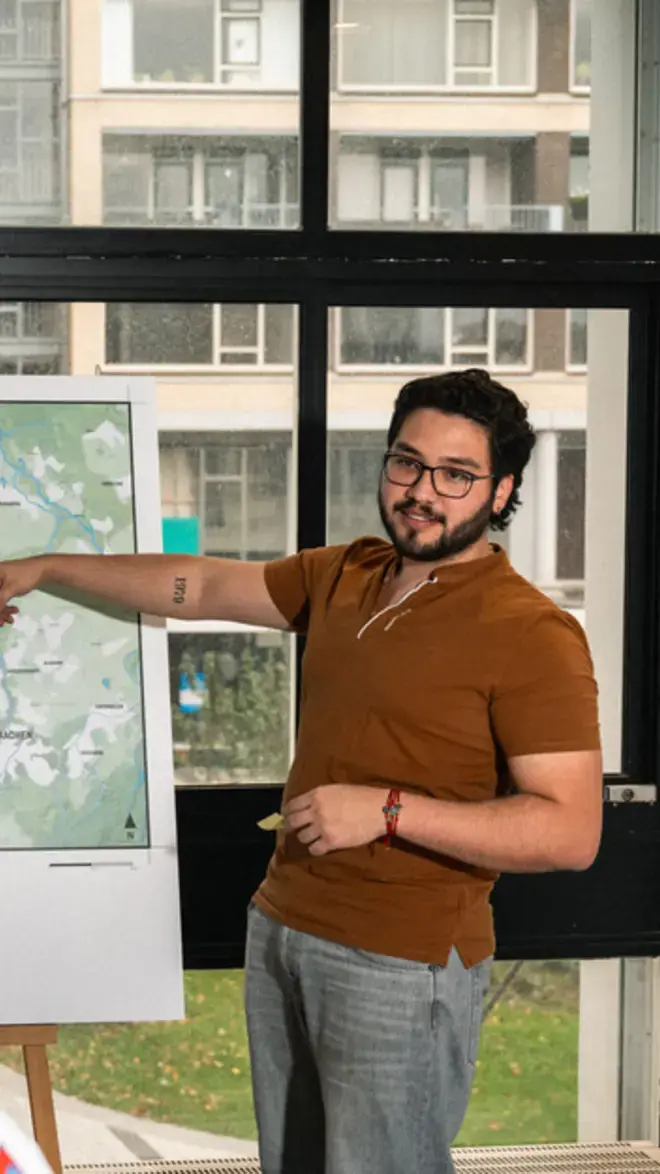
Join our Open Day
Ask all your questions, soak up the atmosphere and experience what it’s like to study here. Whether you already know what you want or are still deciding, discover what truly suits you during the open day.
Try an Experience Day?
Experience a programme from the inside. During an experience day, you’ll follow a schedule together with other prospective students.
Download the programme brochure
Everything about the programme content, admission, internships and future opportunities, all in one clear document.
Why study Circular Cities & Communities at Zuyd?
-
Unique in Europe
The only English-taught programme in circular construction.
-
Hands-on projects
Work on real-life assignments for actual clients.
-
Global community
Study alongside students from all over the world.
-
Make impact
Help shape a 100% circular future.
-
Broad approach
From construction and energy to material reuse.

Study in Heerlen
Nieuw Eyckholt in Heerlen is a modern and easily accessible campus where the Circular Cities & Communities programme is offered. It provides students with an inspiring learning environment, featuring well-equipped classrooms, project rooms, and a welcoming space where you can collaborate or unwind with fellow students. Need a break? There’s even a table football table for a quick match between classes. The campus is centrally located in Heerlen and easily accessible by public transport or bike.
A key feature of the bachelor in sustainable materials management programme is the Urban Living Labs. These labs are innovative research and learning environments where students, teachers, researchers, and professionals work together on real-life urban challenges. Through interdisciplinary research and hands-on projects, students apply their knowledge and skills in practical settings. This gives students the opportunity to apply their knowledge and skills in real-life situations and contribute to the development of smart, sustainable cities.

We are Zuyd. We are close-knit, sincere and confident

Programme Structure
In the first year of Circular Cities & Communities you build a solid foundation. Then you move on to more in-depth work, with projects, internships and practical assignments. You receive personal guidance and work closely with fellow students. This way, you not only learn the profession, but also get to know yourself better and prepare for the step into the professional field.
Your first year
Your week at Circular Cities & Communities is a mix of theory classes, hands-on training, and workshops. We practice technical and design skills, such as circular building and urban planning. In groups, we will work on sustainable materials and innovative technologies. Research skills are also part of our urban sustainability bachelor program: you discover, for example, how to measure the impact of sustainable solutions. In our project weeks, you work alone or in teams on assignments for real clients. We also pay attention to presentation, planning, reporting, and collaboration.
In your first year of your sustainable urban development degree, you will directly combine theory and practice in our varied programme. The programme is built around four blocks, each with their own learning objectives and challenging final projects. In the first few months of study, you will learn the basics. In Sustainable Design, for example, you will learn how to collect and analyse information. Circular Technology shows you all about how circular construction works. At the same time, we delve into urban planning, material use and smart energy solutions.
Each block of our green infrastructure bachelor degree has its own focus and final project. In the first block, you will work on a sustainability plan for an urban area. You set to work collecting the data and creating a plan that is really achievable. Block two challenges you to design a full circular building campaign, including concept development, audience research and material selection. Block three is the most experimental one: you’ll explore innovative technologies and see how to use them to solve urban problems. In the final block, you and your fellow students will organise a Circular Building workshop for schoolchildren. You’ll give the workshop, while also making a documentary about it.
By the end of this year, not only your technical skills will be enhanced, but you will also have learned to think creatively, collaborate and tackle projects from start to finish. Everything you do while studying Circular Cities & Communities will prepare you for your future career in sustainable urban development.
Advanced study and practical experience
A lot of our work is hands-on. With real companies and other clients. This will give you all the space you need to think creatively! And working together is, of course, very important. Each week of your international sustainable architecture degree starts with a new topic. In groups, you will further explore that topic in the context of real clients! And if you get stuck, your teacher will be happy to help you.
In the first half of the second year of the Circular Cities & Communities programme you will work on two different projects. The year starts with a project on circular building, where you will learn how to develop sustainable and circular solutions for urban areas. The second block introduces you to circular economy and sustainable urban planning. You will learn how to document and present stories and review the work of previous students.
From the second half of the second year of your bachelor in circular economy and construction, you make your own choices. You choose one major project and a skills training course, such as sustainable design or circular technologies. These projects are in collaboration with real clients, such as local authorities or companies. You will also prepare for your internship in the third year by creating a personal development plan and applying for a job.
In year 3, you spend the first half of the year doing an internship at a company or organisation of your choice. either in the Netherlands or abroad. After your internship, you will choose four elective modules related to international green building studies. Two of these will have to be taken in the second half of your third year either within the programme, or outside of it, for example at partner universities in Sweden, America or Italy. Within Circular Cities & Communities you can choose elective modules such as:
- Circular urbanism: research sustainable urban development and planning.
- Sustainable use of materials: learn about creative technologies and materials for circular construction.
- Energy efficiency: analyse and optimise energy use in urban areas.
- Water management: design and implement sustainable water management systems.
- Waste management: devise strategies to reduce and reuse urban waste.
- Green infrastructure: work on the development of green spaces and sustainable infrastructure in cities.
In the first semester of the fourth year of the Circular Cities & Communities programme you will follow 2 of the following elective modules:
- Circular economy: explore how sustainable economic models work.
- Sustainable design: improve your design skills with a focus on sustainability.
- Urban innovation: come up with innovative solutions to urban challenges.
- Personal project: work on your own project that demonstrates your vision of sustainability.
- Future-oriented design: design for future urban challenges.
In the second half of your last year of the bachelor in eco-friendly construction, you’ll work on your graduation project for a real client. You’ll submit a final product and a thesis, demonstrating that you are ready to enter the field as an entry-level professional.
Graduation title
After graduation, you may use the title Bachelor of Science.
Internships
In the first half of year 3 of our energy-efficient construction bachelor, you will do an internship at a company of your choice. This allows you to experience what it’s really like to work in the field of Circular Cities & Communities. You will work in a team of professionals with diverse skills and contribute to sustainable and circular solutions for urban challenges. You will apply the knowledge and skills you’ve developed so far and learn to work with the methods and tools used by your internship company. During your internship, you’ll be supported by an internship supervisor from the programme as well as a supervisor at the internship organisation. They will help you achieve your learning goals and provide guidance if any issues arise.
Where you choose to intern during your sustainable cities and communities degree is up to you. You can work with municipalities, architectural firms, sustainability consultancies, or non-profit organisations. Want to gain international experience? Then you can do your internship in countries such as Belgium, Vietnam, the UK, the US, Colombia, or Thailand. If you choose an internship within Europe, you may be eligible for an Erasmus scholarship to help cover additional costs.
Guidance and support
Especially in your first year of the environmental engineering bachelor program, you may need some time to find your footing. If things don’t go smoothly at first, we’re here to help. At key moments, we’ll support you in choosing the direction and topics that suit you best. Ultimately, you set the course of your education, but you don’t have to do it alone.
Because everything centres around your development, a student counsellor will follow your progress throughout your studies. You can turn to this counsellor with any questions or concerns. At Circular Cities & Communities you’ll receive extensive guidance throughout your studies. In the first two years, you’ll be paired with a dedicated study supervisor. This same supervisor will remain available to you in your final two years for ongoing support and advice. You’ll receive targeted coaching, take part in practical workshops, and have individual sessions to help you with both your international green building studies and personal development.
During your third-year internship, you’ll benefit from specialised internship guidance tailored to your personal learning goals. In the fourth year, you’ll prepare for graduation with the support of a graduation lab, a space where you’ll receive expert coaching as you complete your research and final project. In addition to your study supervisor, you can always reach out to student deans and psychologists for guidance related to your studies, personal circumstances, or any other questions.
Also, good to know: in our green building bachelor program we work a lot in small groups. That’s a great way to get to know your fellow students quickly. We believe it’s important that you feel at home at Zuyd. That’s why we organise various social activities throughout the year. Because at Zuyd Circular Cities & Communities, studying is about more than just books.
Your first year
Your first year
Your week at Circular Cities & Communities is a mix of theory classes, hands-on training, and workshops. We practice technical and design skills, such as circular building and urban planning. In groups, we will work on sustainable materials and innovative technologies. Research skills are also part of our urban sustainability bachelor program: you discover, for example, how to measure the impact of sustainable solutions. In our project weeks, you work alone or in teams on assignments for real clients. We also pay attention to presentation, planning, reporting, and collaboration.
In your first year of your sustainable urban development degree, you will directly combine theory and practice in our varied programme. The programme is built around four blocks, each with their own learning objectives and challenging final projects. In the first few months of study, you will learn the basics. In Sustainable Design, for example, you will learn how to collect and analyse information. Circular Technology shows you all about how circular construction works. At the same time, we delve into urban planning, material use and smart energy solutions.
Each block of our green infrastructure bachelor degree has its own focus and final project. In the first block, you will work on a sustainability plan for an urban area. You set to work collecting the data and creating a plan that is really achievable. Block two challenges you to design a full circular building campaign, including concept development, audience research and material selection. Block three is the most experimental one: you’ll explore innovative technologies and see how to use them to solve urban problems. In the final block, you and your fellow students will organise a Circular Building workshop for schoolchildren. You’ll give the workshop, while also making a documentary about it.
By the end of this year, not only your technical skills will be enhanced, but you will also have learned to think creatively, collaborate and tackle projects from start to finish. Everything you do while studying Circular Cities & Communities will prepare you for your future career in sustainable urban development.
Advanced study and practical experience
Advanced study and practical experience
A lot of our work is hands-on. With real companies and other clients. This will give you all the space you need to think creatively! And working together is, of course, very important. Each week of your international sustainable architecture degree starts with a new topic. In groups, you will further explore that topic in the context of real clients! And if you get stuck, your teacher will be happy to help you.
In the first half of the second year of the Circular Cities & Communities programme you will work on two different projects. The year starts with a project on circular building, where you will learn how to develop sustainable and circular solutions for urban areas. The second block introduces you to circular economy and sustainable urban planning. You will learn how to document and present stories and review the work of previous students.
From the second half of the second year of your bachelor in circular economy and construction, you make your own choices. You choose one major project and a skills training course, such as sustainable design or circular technologies. These projects are in collaboration with real clients, such as local authorities or companies. You will also prepare for your internship in the third year by creating a personal development plan and applying for a job.
In year 3, you spend the first half of the year doing an internship at a company or organisation of your choice. either in the Netherlands or abroad. After your internship, you will choose four elective modules related to international green building studies. Two of these will have to be taken in the second half of your third year either within the programme, or outside of it, for example at partner universities in Sweden, America or Italy. Within Circular Cities & Communities you can choose elective modules such as:
- Circular urbanism: research sustainable urban development and planning.
- Sustainable use of materials: learn about creative technologies and materials for circular construction.
- Energy efficiency: analyse and optimise energy use in urban areas.
- Water management: design and implement sustainable water management systems.
- Waste management: devise strategies to reduce and reuse urban waste.
- Green infrastructure: work on the development of green spaces and sustainable infrastructure in cities.
In the first semester of the fourth year of the Circular Cities & Communities programme you will follow 2 of the following elective modules:
- Circular economy: explore how sustainable economic models work.
- Sustainable design: improve your design skills with a focus on sustainability.
- Urban innovation: come up with innovative solutions to urban challenges.
- Personal project: work on your own project that demonstrates your vision of sustainability.
- Future-oriented design: design for future urban challenges.
In the second half of your last year of the bachelor in eco-friendly construction, you’ll work on your graduation project for a real client. You’ll submit a final product and a thesis, demonstrating that you are ready to enter the field as an entry-level professional.
Graduation title
After graduation, you may use the title Bachelor of Science.
Internships
Internships
In the first half of year 3 of our energy-efficient construction bachelor, you will do an internship at a company of your choice. This allows you to experience what it’s really like to work in the field of Circular Cities & Communities. You will work in a team of professionals with diverse skills and contribute to sustainable and circular solutions for urban challenges. You will apply the knowledge and skills you’ve developed so far and learn to work with the methods and tools used by your internship company. During your internship, you’ll be supported by an internship supervisor from the programme as well as a supervisor at the internship organisation. They will help you achieve your learning goals and provide guidance if any issues arise.
Where you choose to intern during your sustainable cities and communities degree is up to you. You can work with municipalities, architectural firms, sustainability consultancies, or non-profit organisations. Want to gain international experience? Then you can do your internship in countries such as Belgium, Vietnam, the UK, the US, Colombia, or Thailand. If you choose an internship within Europe, you may be eligible for an Erasmus scholarship to help cover additional costs.
Guidance and support
Guidance and support
Especially in your first year of the environmental engineering bachelor program, you may need some time to find your footing. If things don’t go smoothly at first, we’re here to help. At key moments, we’ll support you in choosing the direction and topics that suit you best. Ultimately, you set the course of your education, but you don’t have to do it alone.
Because everything centres around your development, a student counsellor will follow your progress throughout your studies. You can turn to this counsellor with any questions or concerns. At Circular Cities & Communities you’ll receive extensive guidance throughout your studies. In the first two years, you’ll be paired with a dedicated study supervisor. This same supervisor will remain available to you in your final two years for ongoing support and advice. You’ll receive targeted coaching, take part in practical workshops, and have individual sessions to help you with both your international green building studies and personal development.
During your third-year internship, you’ll benefit from specialised internship guidance tailored to your personal learning goals. In the fourth year, you’ll prepare for graduation with the support of a graduation lab, a space where you’ll receive expert coaching as you complete your research and final project. In addition to your study supervisor, you can always reach out to student deans and psychologists for guidance related to your studies, personal circumstances, or any other questions.
Also, good to know: in our green building bachelor program we work a lot in small groups. That’s a great way to get to know your fellow students quickly. We believe it’s important that you feel at home at Zuyd. That’s why we organise various social activities throughout the year. Because at Zuyd Circular Cities & Communities, studying is about more than just books.
Let's Meet
Not sure about your study choice yet? During an open day or trial study moment you’ll discover what Circular Cities & Communities is really like. We take the time for you, answer your questions and show you around the campus..
Explore from home?
Do you want to learn more about our bachelor track Circular Cities & Communities? Join our online sessions and get a taste of our international programme where green and sustainable solutions will help cities transition into a circular economy.
Our info sessions:
- Will give you a clear understanding of the track’s content, how to apply, and what student life at Zuyd looks like.
- Offer you the chance to ask questions directly to teachers involved in the track
Whether you are still exploring your options or already convinced that Circular Cities & Communities is the place for you, these sessions will help you make a well-informed decision.
Sign up and explore how you can help build the circular cities of tomorrow!

Try it out with an Experience Day
Curious to find out if Circular Cities & Communities is the right fit for you? Join us for a trial study day and experience what it’s really like to follow this international sustainable architecture degree. You’ll take part in engaging classes, work on hands-on assignments, and get to know our students and teachers.
What does a trial study day at Circular Cities & Communities look like?
- Kick-off with students: Our students share their experiences and give you a behind-the-scenes look at the programme. What would you like to discover today?
- Sustainable research: Why is research essential in circular projects? Learn how a well-founded research plan forms the basis for sustainable urban development.
- Break/Meet & Greet: Take a moment to connect with our students and ask them anything you’d like to know about the programme.
- Circular design challenge: Unleash your creativity in this workshop on circular design. Can you come up with a sustainable urban solution?
- Innovative technology challenge: Get to know the basics of circular technologies. Develop your own sustainable prototype!
- Optional workshop: Your day, your choice! Explore a topic that sparks your interest – just like you would when personalising your study path.
- Q&A with study supervisor: Round up with the study supervisor. Any burning questions about our sustainable design and construction degree? Ask them!
What do you bring?
- Laptop: You’ll work on many assignments digitally. Don't have your own laptop yet? No problem! We’re happy to lend you one for the day.
- Pen & paper: For notes, sketches or ideas.
- Lunch: You can bring your own lunch or get something from the canteen.
Ready to discover if Circular Cities & Communities is for you? We look forward to seeing you on the trial study day!

Visit the Open Day
Want to know more about Circular Cities & Communities and find out if this study programme is right for you? Then don’t miss our Open Day! Our students and lecturers will be there to give you all the ins and outs of the green building bachelor program. A short presentation will introduce you to the structure of the programme and what you can expect. After that, students will showcase their projects and share their personal experiences with the programme. You’ll have the chance to speak directly with lecturers and ask all your questions about the courses, development opportunities, and career prospects. Curious about what you can do after completing Circular Cities & Communities? We’ll explain it all!
Get a feel for the circular construction bachelor degree atmosphere and discover whether this is the place where you see yourself studying soon.

What Comes Next?
A Circular Cities & Communities degree opens doors. Whether you start working or continue studying, you’ll be stronger with practical experience and knowledge in your pocket. Read which careers you can pursue, what your opportunities are and how others have approached life after graduation.
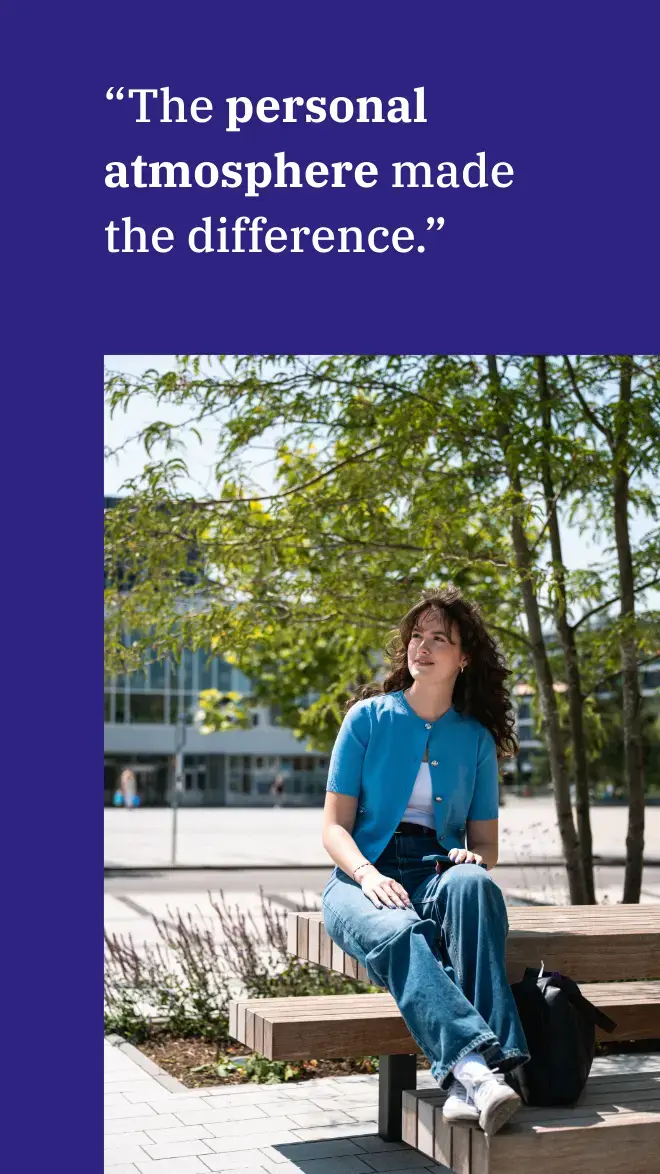
The personal atmosphere made the difference.
Chanaika studied at Zuyd and looks back on her student days with joy. “At Zuyd, I never felt like just a number,” she shares. “The close-knit atmosphere and the personal connection with fellow students and lecturers made me feel at home right away.”
During her studies, she worked on projects for real organizations. “It was inspiring to put into practice what I had learned in class straight away.” She also had the freedom to broaden and deepen her knowledge through minors and internships. “Those opportunities really expanded my perspective on the professional field.”
The sense of community at Zuyd has always stayed with her, through activities and encounters that created real connection. “The combination of learning, doing, and experiencing together gave me the confidence to apply my knowledge in the workplace.”

Your future
Professions
Job prospects and salary
The chances of finding a job immediately after completing this your circular construction bachelor degree are very good. According to recent statistics, around 92% of Built Environment graduates find work straight away or go on to further study. The undergraduate track Circular Cities & Communities within this academy offers many career opportunities within the sustainable and circular economy.
With a background in Circular Cities & Communities you can work in a variety of sectors, including the public sector, business, non-profit organisations and research institutions. You may be involved in developing policy, designing sustainable urban areas, advising companies on environmentally friendly practices and conducting research on innovative solutions to urban challenges.
The demand for professionals with expertise in sustainability and circularity is growing, which means job prospects are good. Salaries vary depending on the specific role, experience, and location, but in general, these careers offer above-average rewards and the opportunity to make a positive impact on society and the environment. With your degree green infrastructure bachelor degree, you will start on average with a starting salary of €35,000 to €50,000 per year, rising to €75,000 or more for experienced circular economy specialists.
Continue studying
After your bachelor's degree in Circular Cities & Communities you can go in different directions. You can start working or take advantage of one of the many opportunities if you feel you haven't finished learning. You can start with a master's degree in Architecture at Zuyd. It is also possible to move on to a research university, often after a six-month to one-year pre-master's degree. For example, you can specialise in building physics at TU Eindhoven, construction at TU Delft, architecture at TU Eindhoven, or planning at the University of Groningen or Radboud University. Besides these examples, many other master's programmes are available after wrapping up your bachelor in circular economy and construction.
Practical Information
Want to start Circular Cities & Communities? We’ll guide you step by step through the application process, admission requirements and the structure of the programme. You’ll also find out what to expect in terms of workload, costs and support.
Study load and study advice
If you are considering the Circular Cities & Communities programme, you should take into account a study load of around 40 hours per week. The time will be divided between on-site contact hours and self-study, with the ratio varying for each study block and academic year. You can count on contact time of between 12 and 15 hours per week, meaning that the rest of the time is spent on self-study and project work. So, you have a lot of freedom to make your own schedule and combine your energy-efficient construction bachelor studies with other things.
At Circular Cities & Communities your schedule varies per study block. One term you work mainly on practical projects, while another is more focused on theoretical deepening. This gives you a varied programme that fits well with the realities of sustainable urban development.
After your application, you will be invited for an individual intake interview. This is your chance to ask questions and discover what our international sustainable architecture degree has to offer you. This is how you know Circular Cities & Communities is the right choice for you!
Application
Want to start Circular Cities & Communities? Great! Some programmes have additional admission requirements, so check these in advance. After you apply, we’ll invite you for a study choice check to make sure the programme is the right fit for you, so you can start well prepared.
Tuition fees
As a degree-seeking student you will have to pay annual tuition fees. Students from the EU pay the statutory tuition fees, and non-EU students pay the institutional tuition fees. Normally speaking, these fees are waived for exchange students from partner universities.
Education and examination regulations
The education and examination regulations (EER) provide all the information you will need about the content of the study programme, the academic support provided, and the way in which examinations are organized.
Study in the Netherlands
Thinking about studying in the Netherlands? Here, education goes beyond the classroom. It’s collaborative, practical, and internationally minded. Combine that with a friendly atmosphere and high academic standards, and you’ve got a study experience that really prepares you for what’s next. We tell you all about it on the Study in the Netherlands page.
Study load and study advice
Study load and study advice
If you are considering the Circular Cities & Communities programme, you should take into account a study load of around 40 hours per week. The time will be divided between on-site contact hours and self-study, with the ratio varying for each study block and academic year. You can count on contact time of between 12 and 15 hours per week, meaning that the rest of the time is spent on self-study and project work. So, you have a lot of freedom to make your own schedule and combine your energy-efficient construction bachelor studies with other things.
At Circular Cities & Communities your schedule varies per study block. One term you work mainly on practical projects, while another is more focused on theoretical deepening. This gives you a varied programme that fits well with the realities of sustainable urban development.
After your application, you will be invited for an individual intake interview. This is your chance to ask questions and discover what our international sustainable architecture degree has to offer you. This is how you know Circular Cities & Communities is the right choice for you!
Application
Application
Want to start Circular Cities & Communities? Great! Some programmes have additional admission requirements, so check these in advance. After you apply, we’ll invite you for a study choice check to make sure the programme is the right fit for you, so you can start well prepared.
Tuition fees
Tuition fees
As a degree-seeking student you will have to pay annual tuition fees. Students from the EU pay the statutory tuition fees, and non-EU students pay the institutional tuition fees. Normally speaking, these fees are waived for exchange students from partner universities.
Education and examination regulations
Education and examination regulations
The education and examination regulations (EER) provide all the information you will need about the content of the study programme, the academic support provided, and the way in which examinations are organized.
Study in the Netherlands
Study in the Netherlands
Thinking about studying in the Netherlands? Here, education goes beyond the classroom. It’s collaborative, practical, and internationally minded. Combine that with a friendly atmosphere and high academic standards, and you’ve got a study experience that really prepares you for what’s next. We tell you all about it on the Study in the Netherlands page.
Admission requirements
Non-Dutch diploma
A secondary school diploma equivalent to the Dutch levels (MBO-4, HAVO and VWO), e.g.:
- Abitur, Fachhochschulreife
- International baccalaureate, European Baccalaureate
- High school, GPA average at least 3.0
Extra admission requirements
English language
- EU: Additional proof of English for EU students is only needed when they did not have English as their exam course.
- Non-EU: Students from outside of the EU are required to take an IELTS (score at least 6) or TOEFL test (paper score at least 550 or Internet 80). Please note that your test results must be valid at the start of the programme. TOEFL and IELTS scores expire after 2 years. Cambridge certificates are valid indefinitely.
Mathematics
EQF level 4 diploma with mathematics up to and including the final year. If you do not meet these mathematics requirements you have to pass the OMPT test level C.
Immigration regulations
Do not forget to check the immigration regulations imposed by the Dutch authorities. Depending on your nationality, you may need to apply for a visa for The Netherlands. This can be a time-consuming and expensive process. Therefore, start your application process well in advance to avoid disappointment.
Application deadline
Applications for enrolment should be in our possession before the deadline. They differ for EU- and Non-EU students:
- NL students: 1st of July
- EU students: 1st June
- Non-EU students: 1st May
Havo
All profiles are accepted for admission.
Vwo
All profiles are accepted for admission.
Mbo
You can be admitted to our programme with an mbo level 4 diploma.
21+
If you don’t have the required diploma and are 21 years or older, you can request an admission interview by contacting our office at builtenvironment@zuyd.nl
Join our Open Day
Ask all your questions, soak up the atmosphere and experience what it’s like to study here. Whether you already know what you want or are still deciding, discover what truly suits you during the open day.

Try an Experience Day?
Experience a programme from the inside. During an experience day, you’ll follow a schedule together with other prospective students.

Download the programme brochure
Everything about the programme content, admission, internships and future opportunities, all in one clear document.

European Studies
The English-taught bachelor’s programme European Studies teaches you to work together on solutions for societal challenges in Europe.

International Business
You’ll learn to think creatively and critically, spot opportunities, and collaborate internationally. From day one, you’ll work in English on real-world projects.
