Master Interior Architecture

In short
In the Master's programme in Interior Architecture, you will learn to develop a concept for a space based on your own ideas and artistic vision and to realise that concept. An important part of this is how you present your conclusions as an essential part of your architectural design. For each assignment, you will be asked to make connections between your own work and that of others, and between your work and the public.

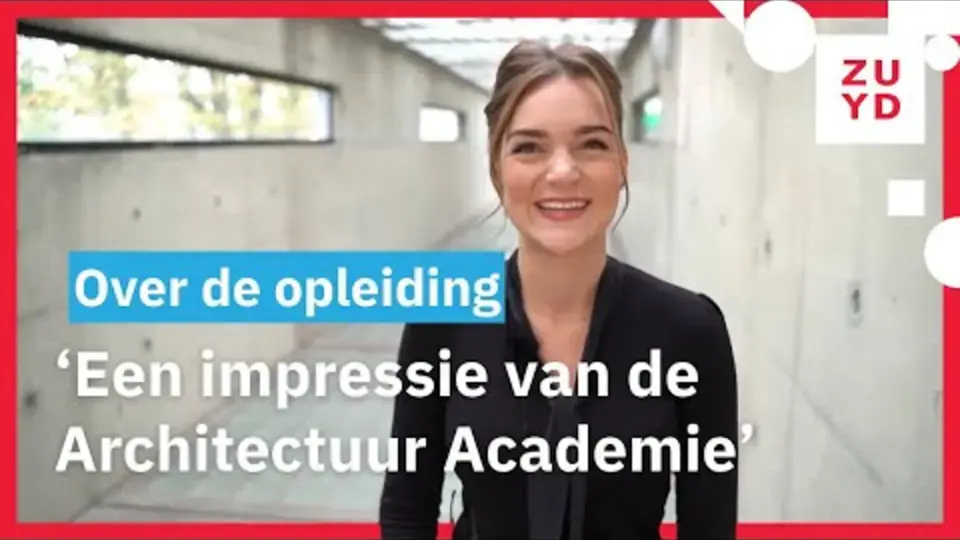
Is it right for you?
This programme is intended for graduates with a bachelor's degree in architecture/interior design or another bachelor's programme in the field of architecture.
After this you can
Upon successful completion of the programme, you will receive the title Master of Arts. The title is recognised by the Union of Dutch Interior Architects (bni) and, after two years of practical experience, you can register with the Architects Registration Board.
Is it right for you?
Is it right for you?
This programme is intended for graduates with a bachelor's degree in architecture/interior design or another bachelor's programme in the field of architecture.
After this you can
After this you can
Upon successful completion of the programme, you will receive the title Master of Arts. The title is recognised by the Union of Dutch Interior Architects (bni) and, after two years of practical experience, you can register with the Architects Registration Board.
Structure and content
Curious about what to expect? Here you can read about how the master's programme is structured, which topics are covered and how you can combine the programme with your work and private life. This will help you determine whether it fits in with your schedule and ambitions.
About the master's programme
Structure
During your two years of study in Maastricht, you'll have the opportunity to deepen your design skills, personal interpretation of your professional situation, and artistic talent. You'll gain professional knowledge, insights, and skills based on your own applied research. You'll also actively contribute to collaborative projects.
Year 1
Your Own Studio
In the first year, you'll work in your own studio, where you'll carry out hypothetical assignments and, together with your tutors, evaluate your design process step by step. In these assignments, you'll explore materiality, light, time, scale, and composition.
Assignments
We begin an assignment with excursions to various locations, where you'll test them with your senses and explore them with the spirit of our time, from within. You'll explore the anatomy of the place, generate empathy, and build understanding. You'll formulate an intention to meaningfully rebalance the choreography and illustrate the intended meaning as a built structure of explicit materiality. Theoretical research and analysis play a key role in these assignments.
Year 2
Final Master's Exam
In the second year, you focus on your thesis and graduation project. Your graduation project is the final Master's exam. This assessment proves your professional qualifications. You position yourself as an interior architect and present yourself to the outside world, laying the foundation for a future career. It also offers the opportunity to make a critical contribution to the debate on current issues and is valuable for the further development of the profession.
Freedom of Choice
The topic of your graduation project is yours to choose, yet it should be within the broadest sense of the interior. It is a hypothesis in the form of a "built-up area" context. The selection and motivation for your graduation project are part of the graduation plan you submit. You will need to determine the location and the primary idea of the intention.
Thesis and Anatomical Model
Your graduation project consists of two interconnected layers: the thesis and the anatomical model. The thesis should form the foundation of your project, based on linguistic and theoretical research spanning historical, philosophical, cultural, and socio-political areas. The anatomical model is the concrete embodiment of your intention and encompasses all spatial elements.
Programme
What makes a particular place so distinctive? Is it the light that falls through the glass windows at a specific angle? The materials and colors of the chairs, tables, curtains, walls, floor? The specific sounds of the room? The feel, the smell of things? The people...? Phenomenological aspects determine the atmosphere of an interior.
The core
In our Master's programme in Interior Architecture, interior design is not a niche, nuance, or aspect of architecture, but a fundamental attitude toward the surrounding world. The core of this Master's programme is understanding a place in all its manifestations before transforming it to meet changing needs and requirements.
Study load
In general, you will study and work at the academy for approximately 20 hours per week. In addition, you will need to study at home for approximately 20 hours per week.
Education and Examination Regulations
The education and examination regulations contain all the information you need about the content of the programme, study guidance, and how the exams are organized. Check the EER.
Visa/residence permit
Zuyd will help you with this process, but start early. It can take several weeks.
Accommodation
Find a place to live. Student housing in the Netherlands is limited, so don't wait too long.
Health insurance
You must have health insurance that covers your time in the Netherlands.
Practical information
Before you start your master's programme, you'll naturally want to know how everything works. This section provides all the practical information you need: from admission requirements to costs and grant options. You'll also find information on how to apply and answers to frequently asked questions.
Admission requirements
To assess whether you have the required admission competencies, we invite you to start the admission procedure. The first step is to register in Studielink. We will then invite you to start the admission procedure.
Before applying, make sure to check the admission requirements. This page outlines everything international students need to know about our bachelor and master requirements.
Costs
As a student wishing to obtain a degree, you pay annual tuition fees. Students from the EU pay the statutory tuition fees, while students from outside the EU pay the institutional tuition fees. These fees are normally waived for exchange students from partner universities. Read more about tuition fees.
Scholarships
Looking for Dutch scholarships to finance your stay in the Netherlands? Zuyd offers several scholarships for talented and highly motivated non-EU students enrolling in a government-funded bachelor’s or master’s programme taught entirely in English. Read more about scholarships.
Admisson
There is a deadline for enrolment in this English-language Master's programme. When you apply, you will go through an admission procedure. Once we have received your application form, we will invite you to participate in the admission procedure, which consists of the following steps:
- A pre-selection based on your motivation letter, diploma and digital portfolio.
- A motivation interview and evaluation of your portfolio.
- A practical assignment.
If you pass the pre-selection (1), we will invite you for an intake interview. You will receive detailed information after you start the selection procedure. During this interview, we will assess whether you are suitable for the programme. You can show examples of the work in your portfolio and discuss them with the admissions committee (2). The final part is a practical assignment proposed by the admissions committee (3).
Admission deadlines
- If you are a non-EU student, you must register before 1 June.
- If you are an EU student, you must register before 1 July.
Contact information
Do you have any questions? Send an email to architecture@zuyd.nl they’ll be happy to help!
Teachers
The Master's programme collaborates with leading professionals: architects, interior designers, representatives from other fields such as art historians, to ensure maximum alignment with current developments and to benefit from their expertise and professional experience.
Degree
Upon completion, you will receive the title Master of Arts. The title is recognised by the Union of Dutch Interior Architects (bni). Registration in the Architects Register is possible after two years of practical experience.
Admission requirements
Admission requirements
To assess whether you have the required admission competencies, we invite you to start the admission procedure. The first step is to register in Studielink. We will then invite you to start the admission procedure.
Before applying, make sure to check the admission requirements. This page outlines everything international students need to know about our bachelor and master requirements.
Costs
Costs
As a student wishing to obtain a degree, you pay annual tuition fees. Students from the EU pay the statutory tuition fees, while students from outside the EU pay the institutional tuition fees. These fees are normally waived for exchange students from partner universities. Read more about tuition fees.
Scholarships
Scholarships
Looking for Dutch scholarships to finance your stay in the Netherlands? Zuyd offers several scholarships for talented and highly motivated non-EU students enrolling in a government-funded bachelor’s or master’s programme taught entirely in English. Read more about scholarships.
Admission
Admisson
There is a deadline for enrolment in this English-language Master's programme. When you apply, you will go through an admission procedure. Once we have received your application form, we will invite you to participate in the admission procedure, which consists of the following steps:
- A pre-selection based on your motivation letter, diploma and digital portfolio.
- A motivation interview and evaluation of your portfolio.
- A practical assignment.
If you pass the pre-selection (1), we will invite you for an intake interview. You will receive detailed information after you start the selection procedure. During this interview, we will assess whether you are suitable for the programme. You can show examples of the work in your portfolio and discuss them with the admissions committee (2). The final part is a practical assignment proposed by the admissions committee (3).
Admission deadlines
- If you are a non-EU student, you must register before 1 June.
- If you are an EU student, you must register before 1 July.
Contact information
Contact information
Do you have any questions? Send an email to architecture@zuyd.nl they’ll be happy to help!
Teachers
Teachers
The Master's programme collaborates with leading professionals: architects, interior designers, representatives from other fields such as art historians, to ensure maximum alignment with current developments and to benefit from their expertise and professional experience.
Degree
Degree
Upon completion, you will receive the title Master of Arts. The title is recognised by the Union of Dutch Interior Architects (bni). Registration in the Architects Register is possible after two years of practical experience.
Pre-Master's programme (Interior) Architecture
Your preparation for our Architecture masters. ✓ Build your personal and professional portfolio
